
Hypothyroidism
The incidence of hypothyroidism in cats following radioiodine (RAI) therapy, as well as the most effective approaches to its management, remain subjects of active research. As our knowledge expands, current recommendations may be refined or revised accordingly.
Hypothyroidism refers to a condition where the thyroid gland is under active, producing a lower than normal level of thyroid hormone.
Hypothyroidism can occur after radioactive iodine therapy or while on anti-thyroid medication. It is not a progressive or life-threatening condition, but it can impact your cat’s overall health— especially kidney function.
Visible signs of hypothyroidism in cats are often subtle or absent, but may include lethargy, weight gain and poor hair coat.
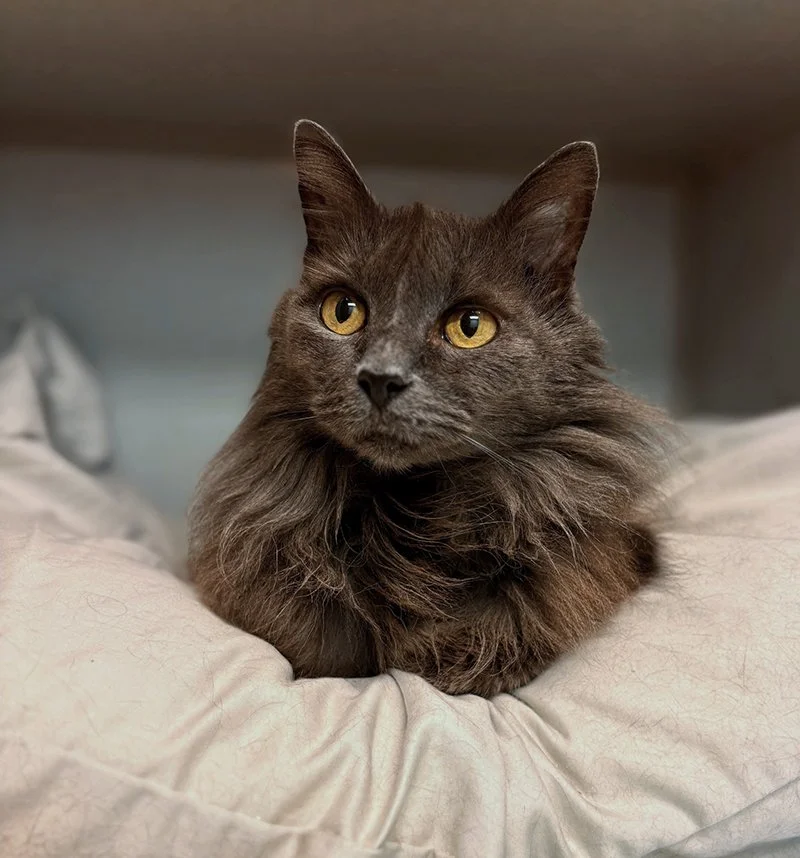
While we aim to avoid hypothyroidism, it can occur in up to 10% of cats treated with RAI. Still, veterinary specialists agree that replacing a life-threatening, hard-to-control disease like hyperthyroidism with a manageable, non-life-threatening condition like hypothyroidism is a successful outcome.
Even if hypothyroidism occurred in 100% of cases, RAI would still be considered the preferred treatment option.
Diagnosis
As other illnesses can influence thyroid hormone levels, a total T4 test alone is insufficient to definitively diagnose hypothyroidism. If the condition is suspected, we typically request a TSH (thyroid-stimulating hormone) test to confirm the diagnosis before initiating treatment.
In cats without significant kidney disease, we usually wait 3–6 months after RAI therapy before starting treatment. This allows time for any remaining normal thyroid tissue to recover and begin functioning naturally.
Treatment
The treatment for hypothyroidism is thyroid hormone (thyroxine) supplementation.
Thyroxine is typically given twice daily, although some cats do well on once-daily dosing. For cats with kidney disease, we recommend twice-daily dosing to better support kidney function. The medication is odourless and tasteless, so it can be easily mixed with canned food or a treat, avoiding the stress of pilling.
Once the right thyroxine dose is established, it usually remains consistent for life. In rare cases, cats may regain normal thyroid function after a year or more and can be weaned off the medication.
Thyroxine has no side effects when properly dosed. If a dose of thyroxine is missed, your cat may feel a bit more tired— but it would not cause immediate harm.
Factors that may affect the rate of hypothyroidism following RAI treatment
-
There may be a slightly higher incidence of hypothyroidism in cats receiving RAI while well-controlled on anti-thyroid medications. When thyroid hormone levels are low or within the normal range due to medical management, normal thyroid tissue may still be functionally active. If RAI is administered under these conditions, the normal thyroid tissue may absorb the radioactive iodine, potentially contributing to post-treatment hypothyroidism. To minimize this risk, we recommend discontinuing anti-thyroid medications at least seven days prior to RAI therapy. This allows our cats to return to a hyperthyroid state, ensuring that normal thyroid tissue is suppressed and thus less likely to take up the RAI.
-
Cats with very large thyroid tumours may be at a higher risk for developing hypothyroidism after treatment. When a tumour involves a significant portion of the thyroid gland, there may not be enough healthy tissue left to produce adequate levels of thyroid hormone, leading to hypothyroidism.
-
The rate of hypothyroidism following treatment may be related to the dose of RAI given. Research suggests that facilities using fixed-dose RAI protocols see a higher incidence of hypothyroidism compared to those using scaled dosing. Since 2001, we have used a scaled-dose approach, which may explain our low rate of post-treatment hypothyroidism (less than 10%).
Thyroxine compared to methimazole
Even though cats who have undergone RAI have a 10% chance of developing hypothyroidism, it is safer than treating hyperthyroidism with methimazole. See the comparative chart below.
| Treating hypothyroidism with thyroxine |
Treating hyperthyroidism with methimazole |
|
|---|---|---|
| Brand Names | Synthroid®, Thyro-tabs® | Tapazole®, Felimazole®, Felanorm® |
| Side Effects | No side effects when dosed appropriately | 15-20% of cats experience side effects including nausea, vomiting, decreased appetite, severe facial itchiness, bone marrow damage, and liver damage | Handling Precautions | None required | Contact with methimazole should be avoided. It should not be handled by pregnant women (can cause birth defects) |
| Dosing | Once the correct dose is established it usually remains consistent for life. Bloodwork is required to establish the dose initially. |
Dose needs to be increased as the tumour grows. Bloodwork needs to be repeated with each dose change. |
| Missed Dose | Occasional missed doses will not cause large fluctuations in thyroid hormone levels | Even one missed dose will lead to elevated levels of thyroid hormone and signs of hyperthyroidism may be seen |
| Taste | Odourless and tasteless, so it can be easily hidden in canned food or a treat | Bitter taste and many cats will refuse it when mixed in food |